GLEN EYRIE FARM: AN HISTORIC PAST, A BRIGHT FUTURE
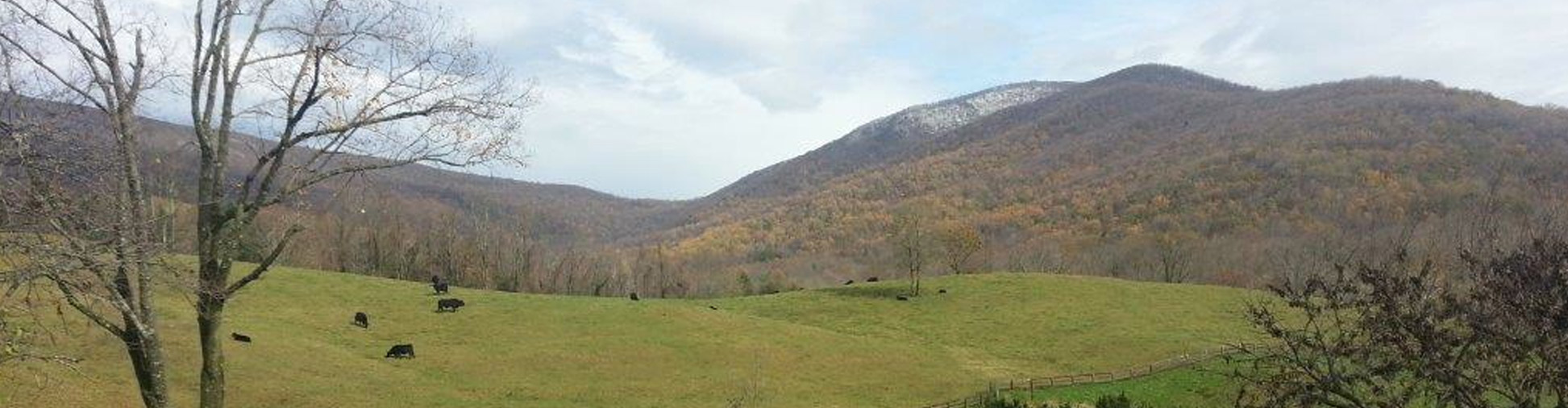
Glen Eyrie Farm sits in one of the most picturesque and historic spots in all of the United States, in a hollow beneath an ancient mountain range that has seen more than its share of history, but remains unchanged in its timeless setting.
The Rush River is formed in the Blue Ridge Mountains above Glen Eyrie Farm. As the Rush flows down as a headwater of the famed Rappahannock River, over the millennia it has formed Harris Hollow, the fertile bottom land between Jenkins Mountain to the South and The Peak to the North.
For centuries the Hollow was the home of the Manahoac Indians, the Native American tribe who fished the streams and hunted the abundant wildlife of the Blue Ridge, considered by many to be the most beautiful and bountiful mountains in America. The name “Manahoac” translates as “They are very happy people.”
Just to the East where Harris Hollow ends and where the Rush joins the Thornton River, is the town of Washington, Virginia. It was so named by the “Father of Our Country” himself. In 1749, the 17 year-old George Washington was working as a surveyor for Lord Fairfax, the colonial proprietor of vast holdings in Virginia. Young George surveyed a tiny village, then just a muddy trading post, and his survey map survives to this day. He named it for his family and today it is the County Seat of Rappahannock County, Virginia.
Harris Hollow was settled by Scots-Irish, English, and German families after the American Revolution. The Miller family’s plantation house, Mountain Green, stands above the Rush as does Sunnyside, a large rambling farm that now produces “farm to table” vegetables and meat.
In 1862, during the War Between the States, the Hollow and Mountain Green were occupied by Union General John Pope’s short-lived Army of Virginia. Over 100,000 Union soldiers camped throughout Rappahannock County before their crushing defeat at the Battle of Second Manassas. A young lady at Mountain Green, Annie Miller, protected her home with Colt army revolver, once driving off Yankee stragglers intent on thievery. Shortly after the war’s end, Annie Miller married Noah Keyser and they soon made their home at Riverside, a log cabin built before the American Revolution, which still stands on the banks of the Rush River. When their seventh child was born in 1883, they moved to their new home on the property, the beautiful Glen Eyrie. Noah Keyser had it carefully crafted over several years, using the finest woods and many skilled artisans.
Glen Eyrie has been carefully refurbished by Randall and Suzanne Spillers, and it is on this historic land, tucked into the Blue Ridge Mountains, that Glen Eyrie Farm has been created with a vision for quality and excellence.